
Investing in the Future
of Greenfield Schools

TWO-QUESTION REFERENDUM: NOVEMBER 3, 2026
The School District of Greenfield values strong, meaningful relationships as the cornerstone of student success. As we look to the future, the district is planning ahead to protect that strong foundation while addressing financial and facility needs that cannot be met through existing resources alone.
In 2022, Greenfield voters approved a four-year operational referendum essential to maintaining and improving student learning throughout the district. Because that referendum was non-recurring, its funding expires at the end of the 2026-27 school year.
At the same time, many of our school buildings and major building systems are aging. The district has identified high-priority repairs and improvements needed to keep our schools safe, functional, reliable, and ready to serve students and the community for years to come.
The timing also provides an opportunity to address these needs while limiting the impact on taxpayers. The district will pay off debt from the 2007 capital referendum for Greenfield High School renovations this year, creating room within the district’s tax structure as that debt falls off.
On Tuesday, November 3, 2026, voters will consider two separate referendum questions.
-
Question 1 (Operational Referendum): $5 million per year for four years
-
If approved, Question 1 would provide $5 million annually from the 2027-28 through 2030-31 school years to sustain educational programs, services, and the learning environment Greenfield students currently receive.
-
Projected additional property tax rate impact: $0
-
-
Question 2 (Capital Referendum): Up to $35 million for facility improvements
-
If approved, Question 2 would provide funding to address high-priority building systems and infrastructure, safety and security improvements, site needs, and repairs and improvements to school and community assets.
-
Projected additional property tax rate impact: $9 per $100,000 of fair market value
-


Planning Ahead


Greenfield Schools are an important part of the community, serving students and families while helping make Greenfield a strong place to live, work, and raise a family.
Community feedback shows a strong foundation of confidence in the district. In a community survey conducted in May and June 2026:
-
557 community members participated
-
82% agreed or strongly agreed that they are satisfied with the School District of Greenfield
-
Nearly half indicated they were familiar with the district's financial and facility challenges and the process the School Board has been using to identify potential solutions
-
73% agreed or strongly agreed that they believe the district is a fiscally responsible steward of taxpayer funds
The district and School Board have been working proactively to examine our financial and facility challenges, gather community feedback, and develop a responsible plan for the future.
Rather than waiting for these needs to become more significant and potentially more expensive, the district is asking voters to consider solutions that would help sustain the educational experience our students receive while protecting the community's investment in its school facilities.
Why Is Operational Funding Needed?
Wisconsin's school funding system makes it difficult for districts like Greenfield to keep pace with the rising cost of providing the educational programs and services students need.
Wisconsin public schools are primarily funded through a combination of state aid and local property taxes. State law establishes a revenue limit for each school district that caps the amount of money a district can receive through those two funding sources for general operations.
The revenue limit system was established in 1993 and has not kept pace with increasing costs and inflation. If school revenues had kept pace with inflation since 2009, districts like Greenfield would receive approximately $3,500 more per student each year.
At the same time, the everyday costs of educating students continue to rise, including:
-
Employee wages and benefits
-
Utilities and insurance
-
Transportation
-
Curriculum and instructional materials
-
Technology
-
Building maintenance
-
Student mental health and other support services
In 2025-26, $357.5 million was reduced from general public school aid to support private voucher schools, and more than 70% of Wisconsin public school districts experienced a reduction in state aid.
When state aid decreases, districts can generally increase their local property tax levy within the state-imposed revenue limit to maintain the same level of funding. In other words, the reduction in state aid shifts more of the funding responsibility to local property taxpayers. Districts may choose not to levy the full amount, but doing so would mean less funding for operations and could require additional budget reductions. Greenfield has not taken that step because it would result in further cuts.
School districts also cannot simply increase their budgets or property tax levies beyond the state-established revenue limit as expenses rise. To exceed that limit, a district generally must receive voter approval through an operational referendum.
That is what Greenfield voters approved in 2022: a four-year, non-recurring operational referendum that provided additional funding for district operations. Because it was temporary, that funding expires at the end of the 2026-27 school year.
Operational referendums have become increasingly common throughout Wisconsin. Nearly 90% of Wisconsin school districts have attempted an operational referendum, and more than 80% have held one within the past 15 years.

Question 1 would provide $5 million annually for four years, beginning with the 2027-28 school year and continuing through 2030-31.
Describe your service here. What makes it great? Use short catchy text to tell people what you offer, and the benefits they will receive. A great description gets readers in the mood, and makes them more likely to go ahead and book.
The funding would help Greenfield Schools:
-
Sustain optimal class sizes in order to meet each student's needs
-
Maintain and enhance instructional programming and academic
-
opportunities
-
Attract and retain high-quality teachers and staff
-
Maintain student mental health supports
-
Stay current with educational technology and digital tools
-
Maintain student transportation services
The proposed referendum is focused primarily on continuing what is working for Greenfield students and schools.
The goal is to provide the resources needed to maintain a strong educational experience for students while giving the district a predictable four-year financial planning window.
Because the proposed referendum is non-recurring, the additional $5 million in annual revenue authority would expire after the 2030-31 school year. This four-year structure also gives the School Board flexibility to reassess the district’s needs and funding outlook—including any future changes to Wisconsin’s school funding formula—before determining whether additional voter-approved funding is needed.

Addressing School Facility Needs
Greenfield's schools are important community assets that have served generations of students. Taking care of those buildings is an important part of protecting the investment our community has already made.
Question 2 would authorize the School District of Greenfield to issue up to $35 million in general obligation bonds for school facility improvement projects. Funding would be used for capital maintenance and improvements, safety and security, site improvements, and related furnishings, fixtures, and equipment.
The proposed work is focused primarily on maintaining, repairing, and improving the schools our community already owns rather than constructing new schools.
The district has developed a plan focused on three priorities:
1. Maintain Essential Building Systems and Infrastructure
The current project plan allocates approximately $28.9 million for essential building systems and infrastructure, including:
-
Roof repairs and replacements
-
HVAC and mechanical systems
-
Building controls and automation systems
-
Electrical systems
-
Generators
-
Windows and exterior building-envelope improvements
-
Domestic water piping
-
Flooring
-
Energy-efficiency improvements
-
Band/choir classroom and practice area renovations

2. Improve Safety and Security
Approximately $3 million is associated with safety, security, and site improvements, including:
-
Security camera improvements
-
Exit signs and emergency lighting
-
Interior fire doors
-
Parking and traffic improvements
-
Bus loop addition at Maple Grove Elementary

3. Repair and Update Shared School and Community Assets
Approximately $3.5 million is associated with school and community assets, including:
-
Performing Arts Center upgrades
-
Pool repairs
-
Tennis court replacement and lighting
-
Track and field surface repairs
-
Middle school gym equipment improvements

The goal is to address needs proactively, extend the useful life of district facilities, and protect the community's existing investment in its schools.
Proposed Projects By School

Greenfield High School
Proposed projects include:
-
Replacement of variable frequency drives and building automation systems
-
Classroom casework
-
Building-envelope repairs and roofing replacements
-
Repair of a sinking slab in the north academic wing
-
Locker room flooring
-
Outdoor restrooms and concession area construction
-
Pool repairs
-
Tennis court replacement and LED lighting upgrades
-
Track and field surface repairs
-
Performing Arts Center upgrades
Proposed projects include:
-
Building controls and hot water system replacement
-
Roofing replacement
-
Classroom and corridor painting
-
Band and choir classroom and practice area renovations
-
Security camera system upgrades and expansion
-
Parent pick-up area and sidewalk/bus improvements
-
Gym bleacher, basketball hoop, and scoreboard replacements
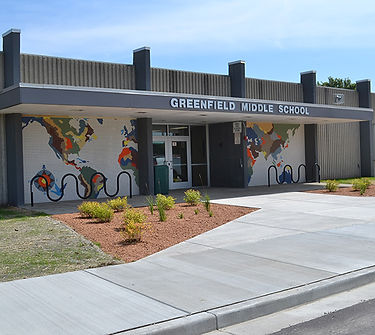
Greenfield Middle School

Proposed projects include:
-
Mechanical system replacements
-
Generator replacement
-
Roofing replacement
-
Cafeteria and rotunda flooring
-
Restroom flooring improvements
-
Exterior façade repairs
-
Exit sign and emergency light fixture updates
-
Entrance and parking lot improvements
-
An additional bus loop
Maple Grove Elementary School

Proposed projects include:
-
Mechanical system replacements
-
Generator replacement
-
Roofing replacement
-
Cafeteria and rotunda flooring
-
Restroom flooring improvements
-
Building-envelope repairs and window replacements
-
Exit sign and emergency light fixture updates
Elm Dale Elementary School

Proposed projects include:
-
Mechanical system replacements
-
Roofing replacement
-
Electrical system improvements
-
Domestic water piping
-
Replacement or refurbishment of interior fire doors in corridors and stairwells
Glenwood Elementary School

Proposed projects include:
-
Mechanical system replacements
-
Roofing replacement
Edgewood Elementary School

Property Tax Impact
Based on current projections, Question 1 is anticipated to have no additional property tax rate impact.
Question 2 is estimated to have a tax impact of approximately $9 per $100,000 of fair market value. That equates to approximately:
-
$18 per year for $200,000 of fair market value
-
$27 per year for $300,000 of fair market value
-
$36 per year for $400,000 of fair market value
-
$45 per year for $500,000 of fair market value

Frequently Asked Questions
CONTACT US
Please use the form below to submit any questions or feedback you may have.